Across New South Wales, ageing commercial and industrial roofs are becoming a growing operational liability. Escalating maintenance costs, repeated water ingress, and unplanned shutdowns are forcing asset owners to reconsider how they manage roof assets.
What was once a technical construction decision—retrofit versus full roof replacement—has now become a board-level financial question. For many live industrial environments, retrofitting with modern metal roofing systems offers a compelling return on investment without the disruption of full demolition.
A metal roof retrofit involves installing a new engineered metal roofing system over an existing roof structure, rather than removing and replacing the entire roof assembly. Unlike full replacement, retrofitting minimises demolition and exposure risks.
Retrofitting is typically suitable when:
A detailed structural assessment is essential to confirm viability.
While retrofit systems involve additional framing components, they often reduce the need for extensive temporary works, waste handling, and replacement of secondary elements.
Retrofitting generally requires fewer labour hours than full replacement, particularly on large-span industrial buildings.
For warehouses, logistics centres, and manufacturing facilities, downtime is often the most significant cost. Retrofitting allows work to proceed with minimal interruption to operations, preserving revenue and productivity.
Modern metal roofing systems can add decades of service life, deferring major capital expenditure and smoothing asset lifecycle planning.
Retrofitted metal roofs significantly reduce leak risk and maintenance frequency compared to ageing membranes or deteriorated sheet materials.
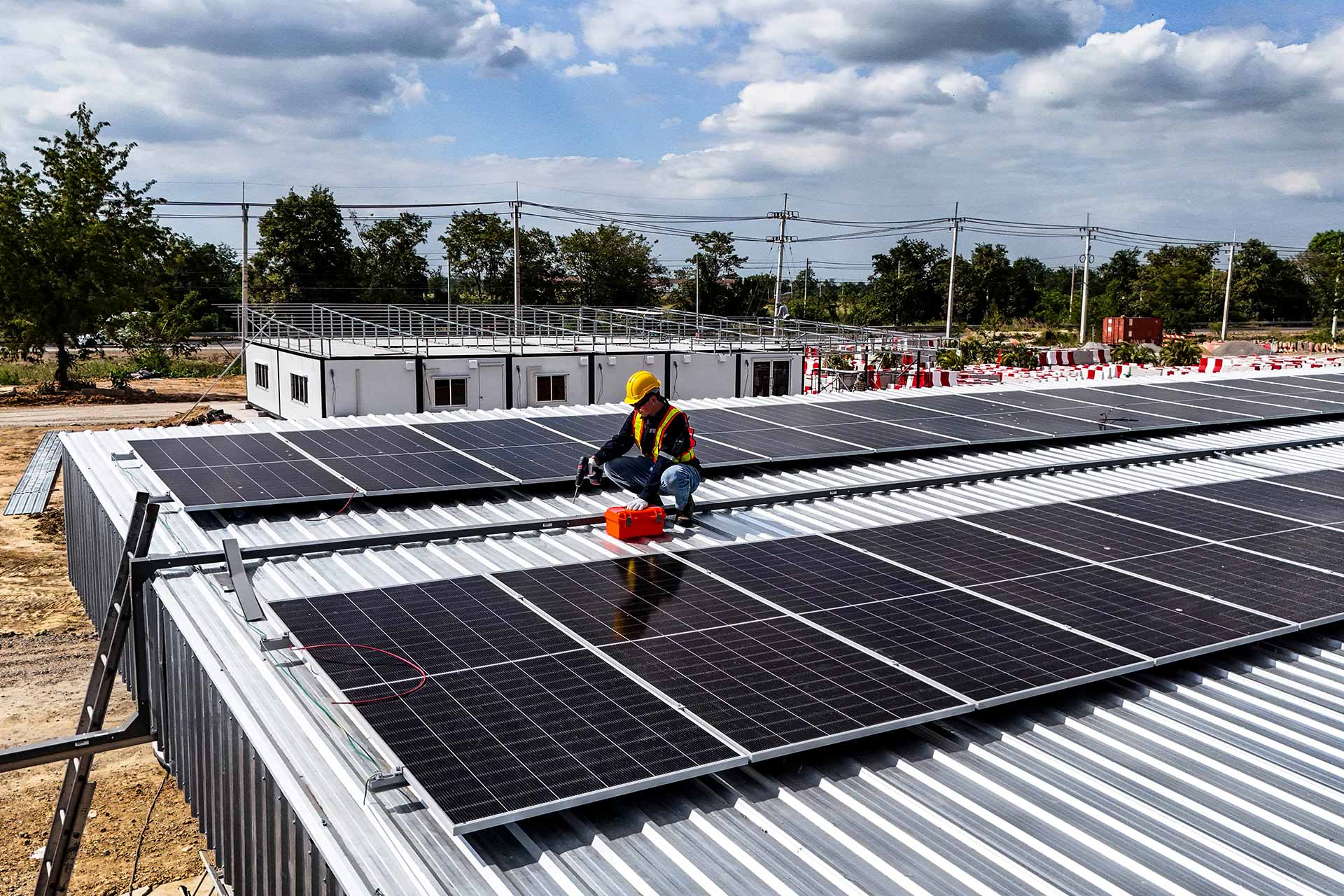
Metal roofing can improve thermal performance and support solar PV integration, reducing long-term energy costs.
By avoiding full demolition, retrofitting reduces noise, dust, and safety risks: particularly valuable in occupied facilities.
Engineers must confirm that the existing structure can support the additional loads introduced by retrofit systems.
Severe corrosion, widespread failure, or friable asbestos may rule out retrofit options and require full replacement.
All retrofit designs must comply with current NCC requirements and relevant Australian Standards, particularly wind and fire performance.
Large roof areas and live operations make warehouses ideal candidates for retrofit solutions.
Retrofitting allows continued production while upgrading roof performance and compliance.
Minimising disruption is critical in logistics environments where downtime directly impacts supply chains.
Where the underlying structure is compromised, retrofitting is unsafe and non-compliant.
Low clearances, inadequate drainage falls, or incompatible roof geometry may prevent effective retrofitting.
Some sites require full removal due to asbestos condition or compliance requirements.
For many NSW asset owners, metal roof retrofitting delivers measurable ROI through lower lifecycle cost, reduced disruption, and extended asset life. When correctly assessed and engineered, it is not a compromise but a strategic investment.
If you are managing an ageing commercial or industrial roof, Element Metal Roofing can assess whether retrofitting is structurally viable and financially justified for your asset.
Contact us today to arrange a retrofit feasibility inspection and make informed, ROI-driven decisions.

Speak to our team for a design consultation, energy upgrade assessment, or pricing for your next project.
Download our Capability Statement for a concise overview of our commercial and industrial roofing capabilities, high-risk project experience, and safety and compliance credentials.




.png)
.png)
